There are teachings we understand intellectually.
And then there are teachings life asks us to embody.
This week in my Davidji Masters of Wisdom & Meditation Teacher Training, we are studying the Buddhist teaching of the Five Remembrances—five simple truths about aging, illness, death, impermanence, and the consequences of our actions.
They arrived at exactly the right moment for me.
Perhaps teachings always do.
The Five Remembrances
In essence, they ask us to remember:
I am of the nature to grow old.
Aging cannot be avoided.
I am of the nature to become ill.
The body is vulnerable.
I am of the nature to die.
My life is finite.
Everything and everyone I love are of the nature to change.
Impermanence and separation are part of being human.
My actions are my true belongings.
I inherit the consequences of how I choose to live.
At first glance, these might seem like rather grim things to contemplate.
I am experiencing them quite differently.
They are teaching me how to become free.
I Am of the Nature to Grow Old
At 78, I don’t have to contemplate aging theoretically.
I’m living it.
My body has changed. My face has changed. My energy and needs have changed. And yes, there are moments when I notice something that isn’t quite what it used to be.
But something else has happened as I’ve grown older.
I know myself more deeply.
I listen more carefully.
I understand that my time and energy are sacred.
I am less willing to abandon myself to belong somewhere else.
And I feel an urgency—not a frantic urgency, but a sacred one—to live whatever years remain with presence, curiosity, love and purpose.
The question is no longer, How do I resist getting older?
It is:
How deeply can I inhabit the life I have now?
Acceptance.
Not resignation.
Not giving up.
Simply ending the argument with reality.
Caring for My Body Without Trying to Control Life
The second Remembrance—I am of the nature to become ill—has invited another layer of reflection.
I care deeply about my health. I nourish my body. I move. I practice yoga. I meditate. I pay attention to sleep and nutrition.
These are beautiful acts of stewardship.
But I’ve also begun noticing the very fine line between caring for myself and trying to control myself.
Especially around food.
This is tender territory for me, and perhaps that’s precisely why I want to name it.
I have spent too much energy trying to figure out the right way to eat.
What if, instead, nourishment could become less about perfection and more about relationship?
What if I could listen to my body without interrogating it?
What if food could simply be food again—nourishment, pleasure, gratitude, community and care?
I don’t need another perfect food philosophy.
I want peace.
Moderation without deprivation.
Structure without rigidity.
Discernment without fear.
Pleasure without guilt.
I want to sit before a meal and know:
I am safe.
There is enough.
I am enough.
I can nourish myself with love.
For me, that is spiritual practice too.
Someday I Will Die
There it is.
The sentence our culture works very hard not to say.
And yet I find something surprisingly beautiful in saying it.
Knowing my life is finite makes this morning precious.
This cup of tea.
This walk.
This conversation.
This person sitting across from me.
This breath.
I don’t want to postpone living until everything is settled.
I don’t need the perfect website.
I don’t need the perfect body.
I don’t need every relationship resolved.
I don’t need to know exactly what comes next.
This is my life.
Not someday.
Now.
Everything I Love Will Change
This may be the Remembrance that reaches deepest into my heart.
People change.
Relationships change.
Bodies change.
Homes change.
Communities change.
Roles change.
Dreams change.
And I change.
And here I find myself returning to another yogic teaching that has become increasingly important to me:
Aparigraha—non-grasping.
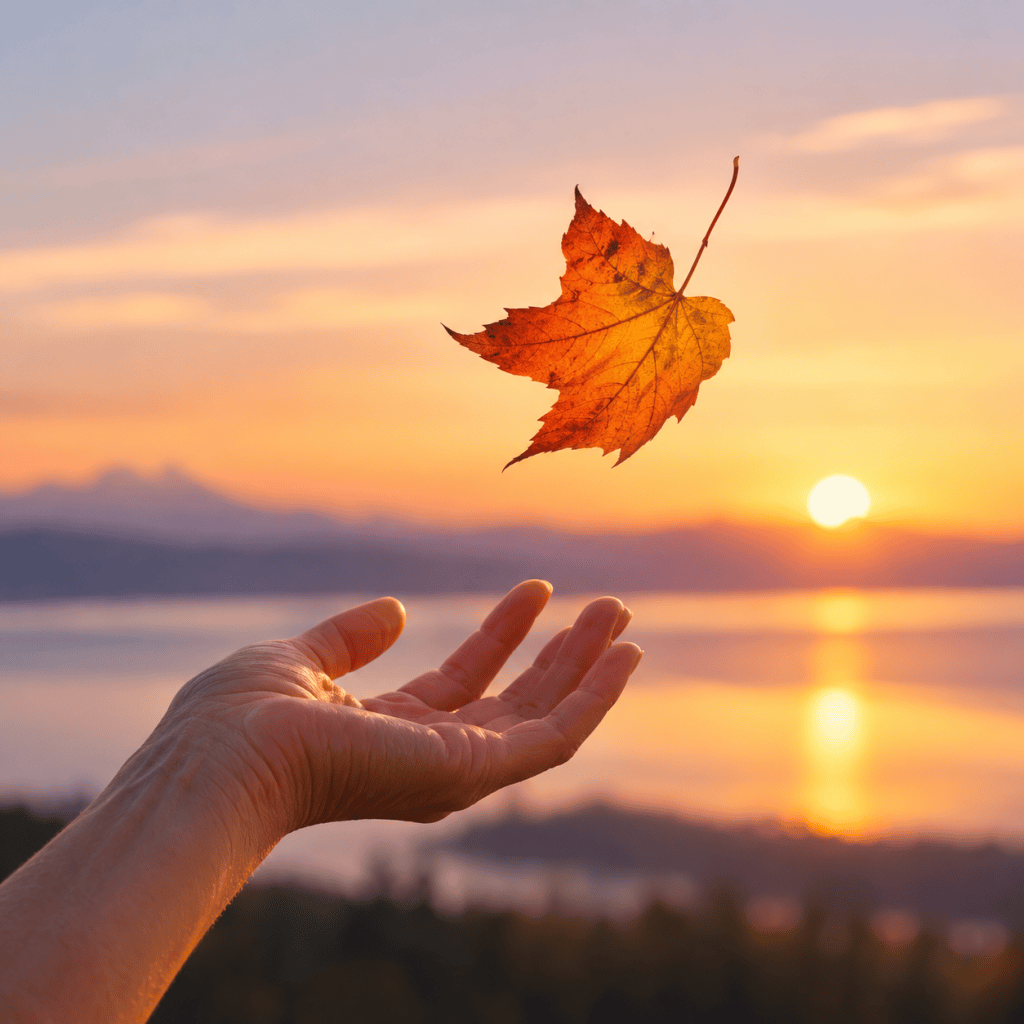
Open hands.
I can love without possessing.
I can care without controlling.
I can be passionate and deeply engaged with life without gripping it so tightly that I suffer when life inevitably changes.
And perhaps most importantly, I can recognize when something has completed its season.
A relationship.
A role.
A belief.
An identity.
A habit.
A way of seeing myself.
Letting go does not mean it didn’t matter.
Sometimes letting go is precisely how we honor what mattered.
Autumn Knows How to Let Go
Perhaps that is why these teachings feel especially poignant as we cross the threshold of the fall equinox.
Nature isn’t subtle about impermanence.
The leaves change.
The light changes.
The temperature changes.
And eventually the tree releases what it can no longer carry into the next season.
The tree does not seem to regard this as failure.
So I am taking my cue from autumn.
There are things I am ready to stop carrying.
Fear.
Doubt.
Guilt.
Shame.
Grievances.
Regrets.
Resentments.
Resistance.
Attachment.
Anger.
Impatience.
Judgment.
And perhaps most of all, perfectionism—the exhausting belief that if I could just get everything exactly right, I could finally relax and trust my life.
I’m beginning to understand something else.
Peace doesn’t come after I finally control everything.
Peace comes when I stop requiring life to be controllable.
My Actions Are My True Belongings
The fifth Remembrance brings all of this home.
I cannot control aging.
I cannot guarantee health.
I cannot prevent death.
I cannot stop change.
I cannot make another person remain who I want them to be.
But I am not powerless.
I can choose how I show up.
I can choose presence instead of fear.
Compassion instead of judgment.
Curiosity instead of certainty.
Forgiveness instead of grievance.
Discernment instead of reactivity.
And when I get it wrong—and I will—I can acknowledge it, learn, make amends when needed, forgive myself and begin again.
I cannot rewrite my past.
But I can allow my past to become wisdom rather than a prison.
Open Hands
As I’ve reflected on these teachings, I keep returning to the image of open hands.
There is so much I love about this life.
I want to be passionate.
Engaged.
Curious.
Creative.
Useful.
I want to love people deeply.
I want to keep teaching and learning and writing and meditating and laughing and walking beneath trees and sitting across from people I love.
Detachment doesn’t mean caring less.
Perhaps true non-attachment allows us to love more, because we stop demanding permanence from things that were never promised to be permanent.
So my intention during this season of letting go is simple:
I release what has completed its work in me.
I forgive what needs forgiving.
I grieve what needs grieving.
I bless what needs blessing.
I release what needs releasing.
I make peace with my body.
I make peace with food.
I make peace with my past.
I make peace with change.
And I choose to be here.
Fully.
Gratefully.
Awake.
Because perhaps that is the deeper invitation of the Five Remembrances:
I cannot control the nature of life.
But I can choose the quality of my presence within it.
And every time I write these words, speak them, teach them or share them, I receive the teaching again.
I am not sharing because I have mastered it.
I am sharing because this is how I practice.
This is how I remember.
This is how I begin to embody what I know.
With love,
Sandi

Leave a comment