Lately I have been thinking about a deceptively simple question:
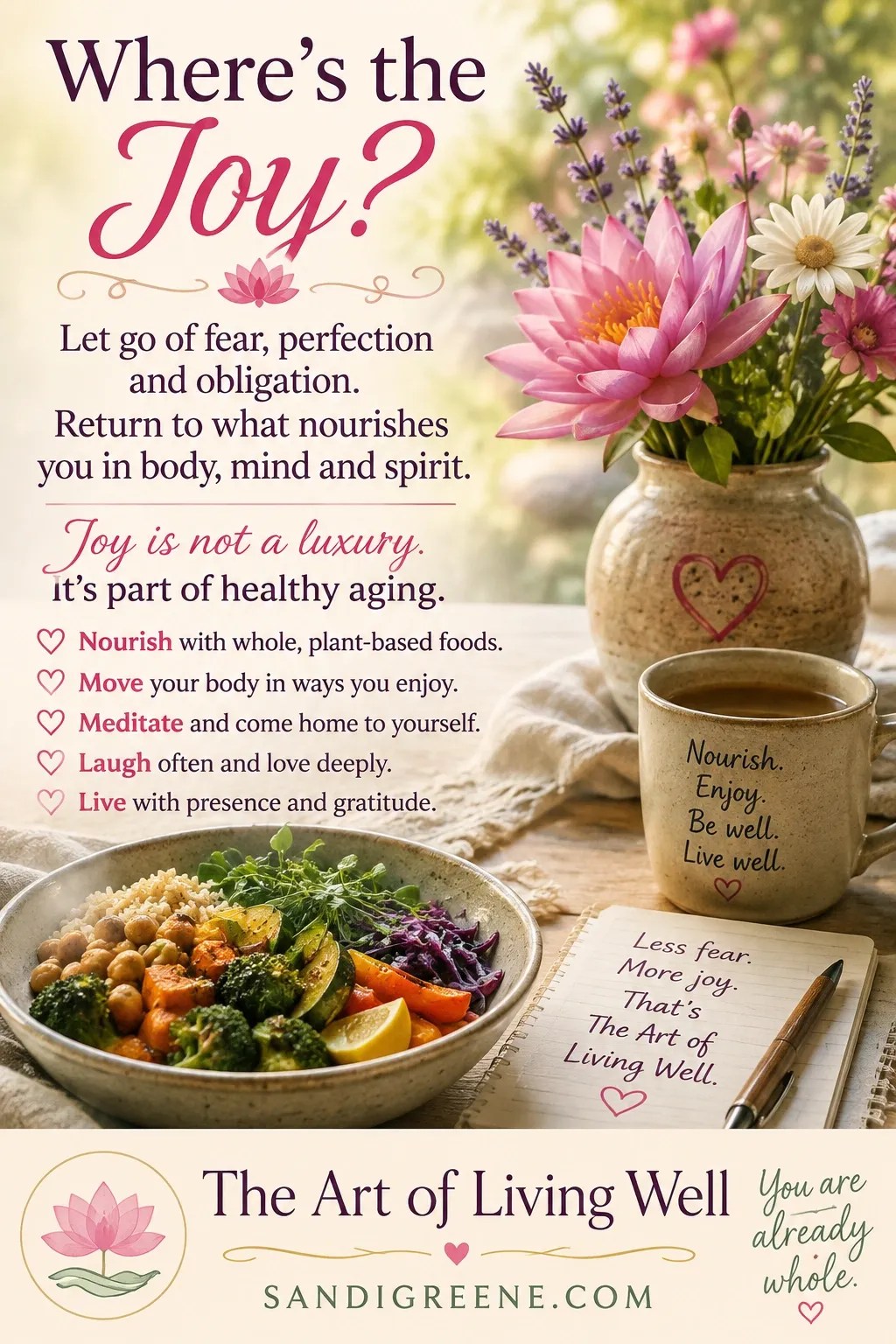
Where’s the joy?
Not the big, extraordinary, once-in-a-lifetime kind of joy.
The ordinary kind.
The first light of morning. A beautiful piece of music. A nourishing meal. A conversation with someone I love. Walking outside and feeling the air on my face. Teaching something that matters to me. Sitting quietly in meditation and realizing that, for this moment, nothing needs to be different.
The older I become, the more convinced I am that the art of living well is largely the art of noticing.
Joy has been here all along.
We Don’t Have to Chase Joy
We live in a culture that continually tells us happiness is somewhere else.
When we accomplish something.
When our circumstances change.
When someone loves us the way we want to be loved.
When we have more money, more recognition, better health, a different home, or finally figure everything out.
But meditation and mindfulness keep bringing me back to something much simpler:
This moment is my life.
If I am constantly waiting for life to become something else before I allow myself to enjoy it, I may miss the very life I have been waiting for.
That doesn’t mean denying difficulty, grief, uncertainty, or disappointment.
It means recognizing that joy and difficulty can coexist.
A heart can ache and still notice a sunset.
We can be uncertain about tomorrow and deeply grateful for today.
We can desire something beautiful—a new experience, a meaningful relationship, even a beloved with whom to share our lives—without postponing joy until it arrives.
Joy Lives in the Body
My study of Ayurveda has also deepened my understanding of balance and well-being.
The late physician and teacher Dr. David Simon taught an integrated approach to health that honored body, mind, emotions, and spirit. That understanding resonates deeply with me.
Healthy aging isn’t merely about extending life.
It is about inhabiting life.
Eating food that nourishes us.
Moving our bodies.
Sleeping and resting.
Meditating.
Spending time in nature.
Learning.
Laughing.
Loving.
Cultivating relationships that nourish rather than deplete us.
And paying attention when our bodies whisper instead of waiting until they have to shout.
This is where ancient wisdom becomes intensely practical.
Aparigraha and the Freedom to Enjoy What Is
One of the principles of yoga philosophy that continues to shape my life is aparigraha—non-grasping or non-attachment.
I am beginning to understand that non-attachment doesn’t mean not caring.
Quite the opposite.
It means loving what is here without trying to possess it.
Showing up wholeheartedly without demanding a particular outcome.
Doing the work that is mine to do and releasing the fruit of my actions, as the Bhagavad Gita teaches.
I can love deeply without clinging.
I can dream without chasing.
I can teach without needing applause.
I can write without needing everyone to read it.
I can open myself to friendship, community and romantic love without believing another person is responsible for completing my life.
My life is already here.
And there is joy in that realization.
The Practice of Noticing
Perhaps joy is less something we find than something we practice noticing.
A cup of tea held between warm hands.
Someone’s laughter.
A flower blooming.
A familiar face.
A moment of genuine connection.
The silence after meditation.
The astonishing realization that we are still here—still learning, still loving, still becoming more fully ourselves.
There is so much beauty we overlook because it isn’t dramatic enough to demand our attention.
Mindfulness asks us to notice anyway.
And when I do, something changes.
I stop asking life to prove that it is good.
I begin seeing the goodness already woven through it.
So, Where’s the Joy?
Here.
Not someday.
Not when everything is resolved.
Not when the future finally reveals itself.
Here.
In this breath.
This body.
This morning.
These people.
This imperfect, beautiful, unfinished life.
At this stage of my life, I don’t want to race past any of it.
I want to be present enough to receive it.
Perhaps that is one of the quiet secrets of conscious living and healthy aging:
We don’t need to manufacture more joy.
Sometimes we simply need to become still enough to notice the joy that has been waiting for us all along.
With love,
Sandi